
Digital banking has completely transformed the way people manage money. From transferring funds and paying bills to applying for loans and tracking expenses, banking services are now available instantly through digital platforms.
But many users still get confused between mobile banking and online banking.
At first glance, both seem similar because they allow customers to access bank accounts digitally. However, they work differently, offer different experiences, and serve different user needs.
In 2026, banks are investing heavily in mobile-first technology, AI-powered financial tools, biometric security, and real-time payments. As digital finance continues evolving, understanding the difference between mobile banking and online banking has become more important than ever.
This complete guide explains:
- What mobile banking is
- What online banking is
- Key differences between them
- Advantages and disadvantages
- Security comparisons
- Which option is better for different users
- Future banking trends in 2026 and beyond
Whether you are a student, freelancer, business owner, or everyday banking user, this guide will help you choose the right digital banking experience for your needs.
What Is Online Banking?
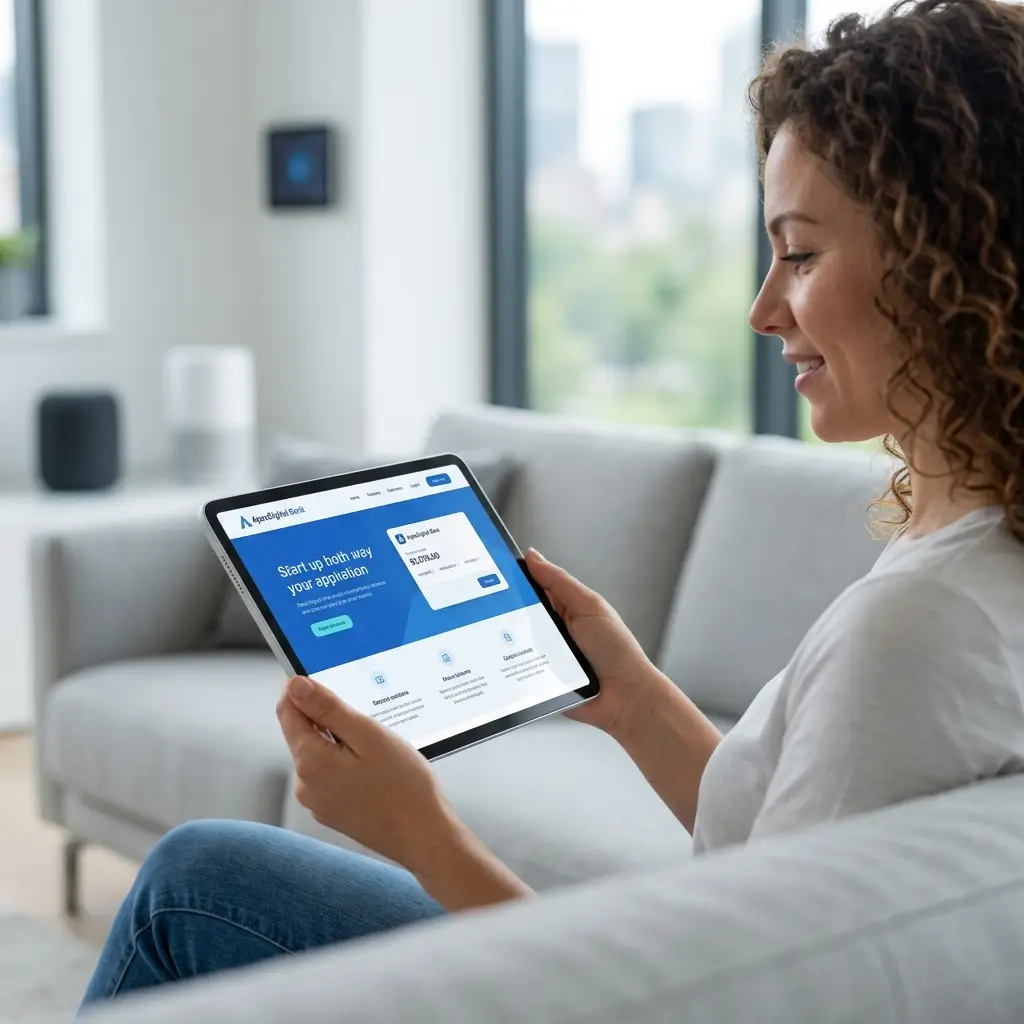
Online banking, also called internet banking, allows customers to access banking services through a web browser.
Users typically log in through:
- Desktop computers
- Laptops
- Browser-based tablets
Online banking platforms are usually accessed through a bank’s official website.
Common Features of Online Banking
Most online banking systems allow users to:
- Transfer money
- Pay bills
- Download account statements
- Manage debit and credit cards
- Apply for loans
- View transaction history
- Update account information
- Access investment services
Online banking is designed to provide full account management digitally.
What Is Mobile Banking?
Mobile banking refers to banking services accessed through a smartphone or tablet app.
Banks provide dedicated mobile applications that are optimized for smaller screens and faster access.
Mobile banking apps are designed for convenience, speed, and everyday financial tasks.
Common Features of Mobile Banking
Modern mobile banking apps often include:
- Instant transaction alerts
- Quick money transfers
- Biometric login
- QR payments
- Mobile wallets
- Budget tracking
- Spending insights
- Card controls
- Push notifications
Mobile banking has become the preferred option for many users in 2026.
Main Difference Between Mobile Banking and Online Banking
The biggest difference is the platform used.
- Online banking works through web browsers
- Mobile banking works through smartphone apps
Both connect to the same banking system, but they offer different user experiences.
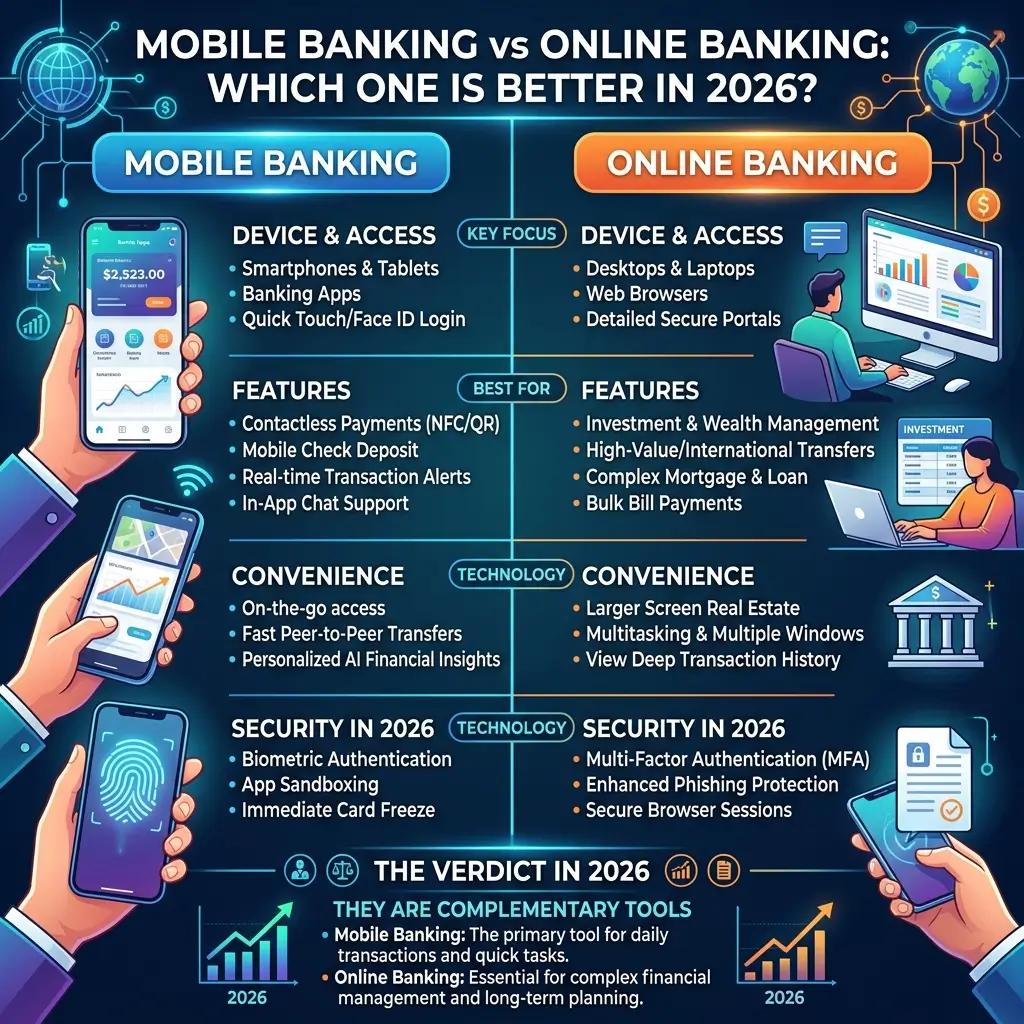
Mobile Banking vs Online Banking: Quick Comparison
| Feature | Mobile Banking | Online Banking |
|---|---|---|
| Platform | Mobile app | Web browser |
| Device | Smartphone/tablet | Computer or browser |
| Convenience | Very high | High |
| Speed | Faster | Moderate |
| Accessibility | Anywhere | Device-dependent |
| Interface | Mobile-optimized | Full dashboard |
| Security | Biometrics + app security | Password + OTP |
| Features | Quick daily tasks | Advanced account management |
Both are useful, but each has different strengths.
Advantages of Mobile Banking
Mobile banking has become extremely popular because of its convenience and speed.
1. Banking Anytime and Anywhere
Your bank is always in your pocket.
Users can access financial services instantly from almost anywhere.
This is ideal for:
- Busy professionals
- Students
- Travelers
- Freelancers
- Remote workers
2. Faster Transactions
Mobile banking apps are optimized for quick actions.
Most tasks require only a few taps.
Examples include:
- Sending money
- Paying bills
- Checking balances
- Locking cards
Mobile apps are generally faster than browser-based systems.
3. Real-Time Notifications
Mobile banking provides instant alerts for:
- Payments
- Withdrawals
- Deposits
- Suspicious activity
This improves financial awareness and security.
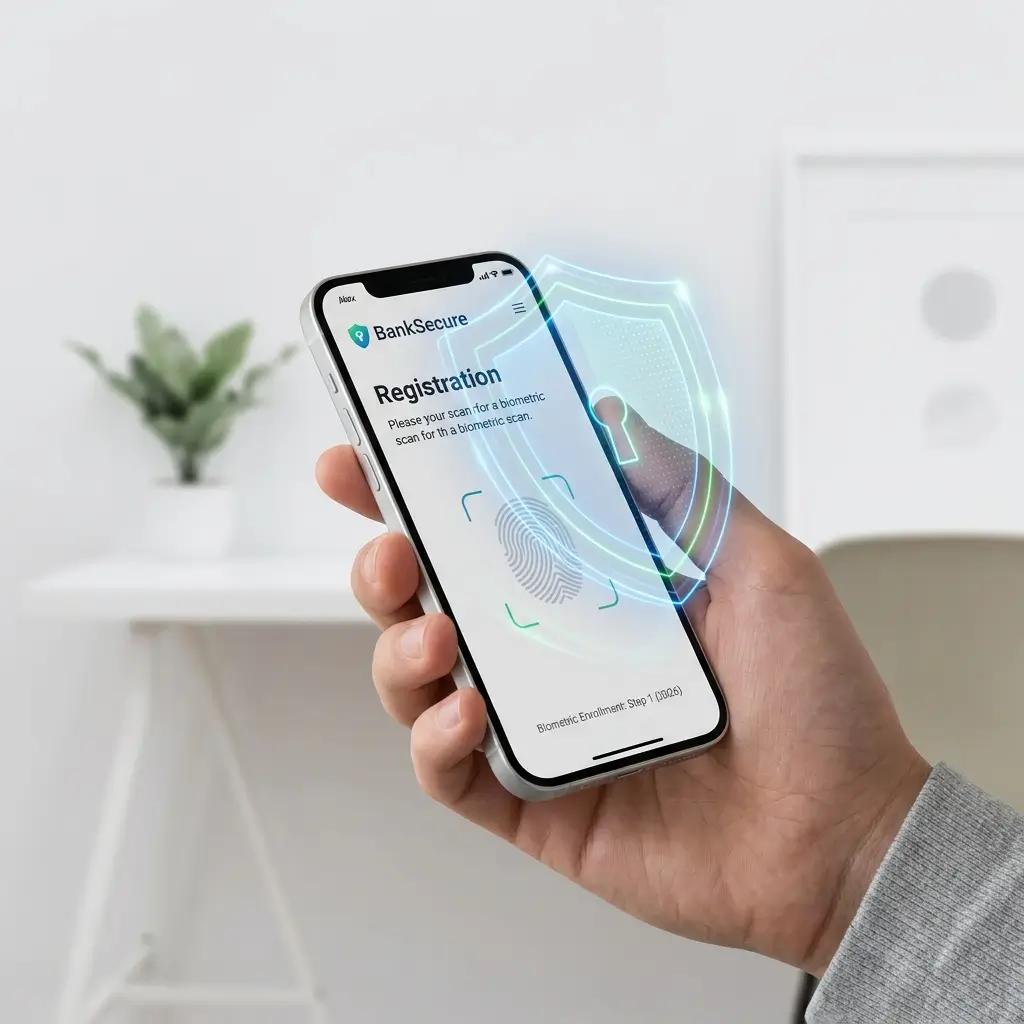
4. Biometric Security
Many apps support:
- Fingerprint login
- Face recognition
- Device authentication
Biometric access improves convenience and account protection.
5. Better User Experience
Mobile apps are designed for simplicity and speed.
Modern banking apps focus heavily on:
- Easy navigation
- Clean design
- Fast loading
- Personalized dashboards
Disadvantages of Mobile Banking
Despite its advantages, mobile banking also has limitations.
1. Smaller Screen Size
Complex financial tasks can be harder on mobile devices.
Large statements and detailed analytics may feel less comfortable on smaller screens.
2. Smartphone Dependence
Mobile banking requires:
- A compatible smartphone
- Mobile app support
- Regular updates
Older devices may struggle with newer banking apps.
3. App Issues and Bugs
Mobile apps may occasionally experience:
- Crashes
- Update problems
- Login issues
- Compatibility errors
Technical problems can temporarily disrupt access.
Advantages of Online Banking
Online banking remains important because it offers more detailed financial management features.
1. Full Banking Features
Online banking platforms often provide more advanced services.
This is useful for:
- Large transfers
- Business banking
- Loan management
- Investment tools
- Detailed account settings
Desktop dashboards are typically more feature-rich.
2. Better for Complex Financial Tasks
A larger screen makes it easier to:
- Analyze statements
- Review reports
- Manage multiple accounts
- Handle business transactions
Business users often prefer desktop-based banking.
3. No App Installation Required
Users simply access banking through a browser.
This works across:
- Laptops
- Computers
- Shared devices
- Tablets
No app download is necessary.
4. Better Multitasking
Online banking is easier for users who work with:
- Accounting software
- Spreadsheets
- Financial reports
- Business dashboards
Desktop banking integrates more smoothly into professional workflows.
Disadvantages of Online Banking
Online banking also has weaknesses compared to mobile apps.
1. Slower User Experience
Browser-based systems are often slower than apps.
Users may need multiple login steps and page loads.
2. Less Convenient
Online banking usually requires:
- A computer
- Browser access
- More navigation
This reduces convenience for quick tasks.
3. Limited Mobile Optimization
Although many banking websites are responsive, apps are usually better optimized for smartphones.
Detailed Comparison: Mobile Banking vs Online Banking
Let’s compare them more closely.
1. Ease of Use
Mobile Banking
Designed for simplicity and speed.
Ideal for quick daily transactions.
Online Banking
More detailed but slightly more complex.
Winner: Mobile Banking
Apps provide a smoother everyday experience.
2. Features
Mobile Banking
Excellent for daily use and smart financial tools.
Online Banking
Usually provides full banking services and advanced controls.
Winner: Online Banking
Desktop systems often offer more comprehensive functionality.
3. Speed
Mobile Banking
Apps load faster and require fewer steps.
Online Banking
Web platforms may feel slower.
Winner: Mobile Banking
4. Security
Both systems are highly secure when used correctly.
Mobile Banking Security
- Biometrics
- Device verification
- App-level encryption
Online Banking Security
- Passwords
- OTP verification
- Secure browser sessions
Winner: Tie
Both can be very secure.
5. Accessibility
Mobile Banking
Always accessible through your phone.
Online Banking
Requires a browser and larger device.
Winner: Mobile Banking
Which One Is Better in 2026?
There is no universal answer.
The better option depends on your needs and banking habits.
Choose Mobile Banking If:
You:
- Prefer convenience
- Use your phone frequently
- Need fast transactions
- Want instant alerts
- Manage daily finances quickly
Mobile banking is ideal for everyday financial activities.
Choose Online Banking If:
You:
- Handle complex transactions
- Run a business
- Need detailed financial controls
- Prefer desktop workflows
- Manage large financial operations
Online banking works better for advanced account management.
Best Option: Use Both Together
Most people benefit from using both mobile banking and online banking together.
This provides:
- Convenience from mobile apps
- Advanced features from desktop banking
The two systems complement each other.
Is Mobile Banking Safer Than Online Banking?
Both are generally very secure.
Modern banks invest heavily in cybersecurity systems.
Mobile Banking Security Features
Mobile apps often include:
- Fingerprint login
- Face recognition
- App-based encryption
- Device authentication
Online Banking Security Features
Browser-based banking usually uses:
- Passwords
- OTP verification
- Secure browser sessions
- Fraud monitoring
Important Safety Tips
Whether using mobile or online banking:
- Never share OTP codes
- Use strong passwords
- Avoid public Wi-Fi
- Keep apps updated
- Monitor transactions regularly
User behavior is critical for security.
Features Available in Both Systems
Both mobile banking and online banking support:
- Fund transfers
- Bill payments
- Account monitoring
- Customer support
- Card management
- Financial alerts
The difference is mostly about convenience and interface.
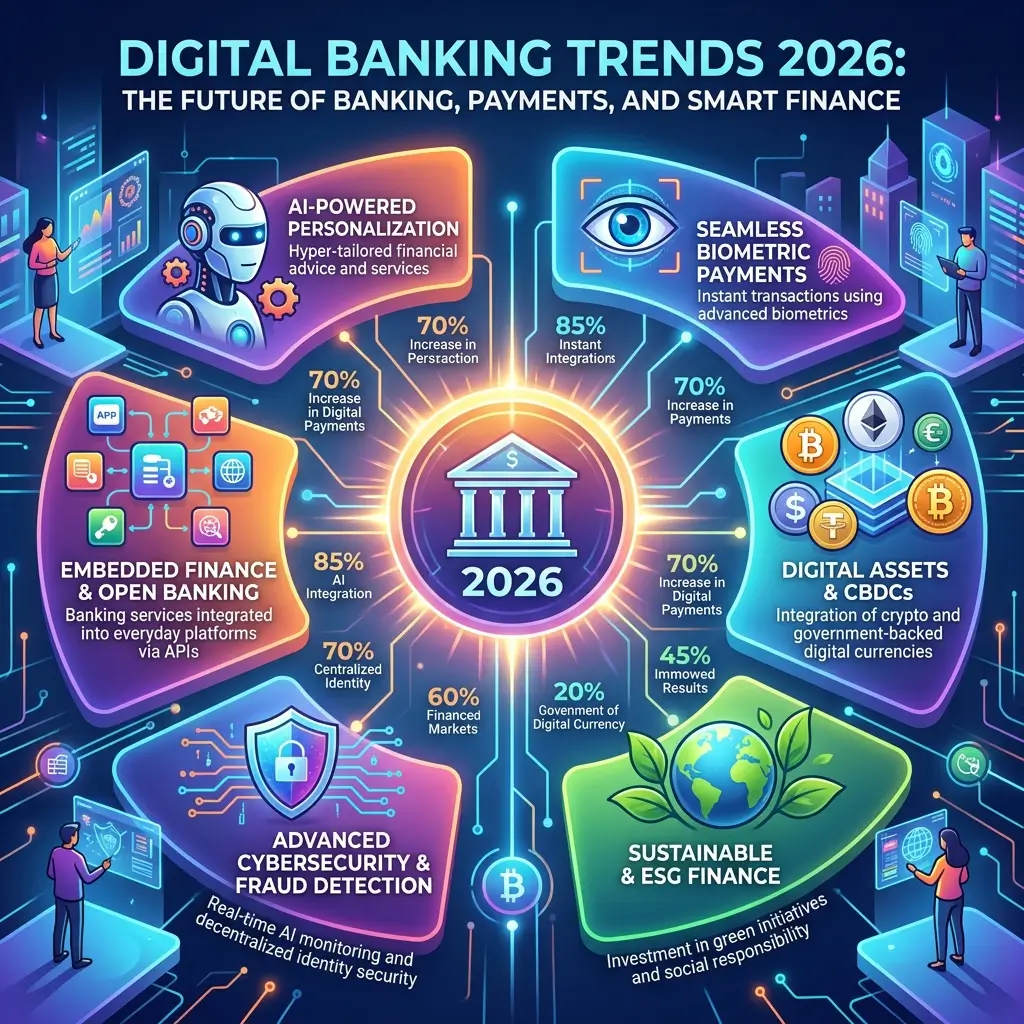
Digital Banking Trends in 2026
Digital banking technology continues evolving rapidly.
Several major trends are shaping the future.
1. AI Integration
Banks now use AI for:
- Spending analysis
- Fraud detection
- Personalized financial insights
- Smart budgeting
AI-powered banking is becoming mainstream.
2. Instant Payments
Real-time transfers are becoming standard globally.
Users expect faster transactions everywhere.
3. Digital Wallet Integration
Banking apps increasingly connect with:
- Digital wallets
- Ecommerce platforms
- Payment systems
- Financial apps
Banking ecosystems are becoming more connected.
4. Advanced Biometric Security
Biometric authentication continues improving through:
- Behavioral biometrics
- Voice recognition
- Multi-device verification
Security systems are becoming smarter and more personalized.
Common Mistakes Users Make
Many users unknowingly increase their banking risk.
1. Using Public Wi-Fi
Public networks can expose sensitive data.
2. Using Weak Passwords
Simple passwords make hacking easier.
3. Ignoring App Updates
Security updates are essential.
Outdated apps may contain vulnerabilities.
4. Clicking Suspicious Links
Phishing scams continue growing worldwide.
Only use official banking apps and websites.
Who Should Use Mobile Banking?
Mobile banking is ideal for:
- Students
- Freelancers
- Everyday consumers
- Travelers
- Remote workers
- Users who value speed and convenience
Who Should Use Online Banking?
Online banking is often better for:
- Business owners
- Financial professionals
- Users handling large transactions
- People managing multiple accounts
Why This Topic Matters for SEO and Financial Content
Comparison keywords perform extremely well in finance content.
Searches like:
- “mobile banking vs online banking”
- “which is better online banking or mobile banking”
- “difference between mobile banking and internet banking”
attract strong user engagement.
These topics help websites improve:
- Search rankings
- Session duration
- Internal linking
- Financial topical authority
They also attract advertising from:
- Banks
- Fintech companies
- Financial apps
- Payment platforms
This increases monetization potential significantly.
Frequently Asked Questions (FAQs)
Q1: What is the main difference between mobile banking and online banking?
Mobile banking uses smartphone apps, while online banking uses web browsers.
Q2: Which is safer?
Both are generally equally secure when proper security practices are followed.
Q3: Can I use both mobile and online banking?
Yes, most users use both for maximum convenience and flexibility.
Q4: Which one is faster?
Mobile banking apps are usually faster for daily transactions.
Q5: Is mobile banking replacing online banking?
Not completely. Both continue serving different user needs.
Q6: Which is better for businesses?
Online banking is often better for advanced business financial management.
Final Thoughts: The Best Banking Experience Combines Both
Mobile banking and online banking are both essential parts of modern digital finance.
Mobile banking provides:
- Speed
- Convenience
- Real-time access
- Simplicity
Online banking provides:
- Detailed controls
- Advanced features
- Better business functionality
- Larger-screen financial management
In 2026, the smartest approach is not choosing one over the other — it is using both together.
As digital banking technology continues evolving, users who understand these tools will enjoy better financial control, stronger security, and more convenient money management in the years ahead.