
Open banking is rapidly transforming the global financial industry. What once seemed like a technical banking concept is now becoming one of the most important innovations shaping the future of finance.
In 2026, open banking is changing how banks, fintech apps, digital wallets, lenders, and financial platforms interact with customer data. It is creating a more connected financial ecosystem where users have greater control, better financial tools, faster payments, and more personalized services.
If you have ever connected a budgeting app to your bank account, used a payment platform that links directly to your bank, or received personalized financial insights from an app, then you have already experienced open banking in action.
But open banking is much bigger than budgeting apps.
It is helping reshape:
- Digital banking
- Online payments
- Financial apps
- Lending systems
- Investment platforms
- Personal finance management
- Cross-border payments
At the same time, it also raises important questions about privacy, cybersecurity, data sharing, and financial regulation.
This complete 2026 guide explains what open banking is, how it works, why it matters, its advantages and risks, and how it is expected to shape the future of global finance.
What Is Open Banking?
Open banking is a system that allows banks and financial institutions to securely share customer financial data with approved third-party providers through APIs (Application Programming Interfaces).
In simple terms:
👉 Open banking allows your bank to securely share specific financial information with trusted apps or services — but only with your permission.
Instead of keeping financial data locked inside one bank, open banking creates a connected system where different financial platforms can work together more efficiently.
This allows customers to access smarter financial services while keeping control over who can access their information.
Why Open Banking Was Introduced
Traditional banking systems were highly closed and centralized.
In the past:
- Banks controlled customer financial data
- Third-party innovation was limited
- Customers had fewer financial tools
- Switching financial providers was difficult
- Financial experiences were often slow and outdated
As fintech companies grew, regulators and technology companies pushed for a more open financial ecosystem.
Open banking was introduced to:
- Increase financial innovation
- Improve competition
- Give customers more control over their data
- Create better digital financial services
- Improve user experience
The idea is simple: financial data belongs to the customer, not just the bank.
How Open Banking Works
Open banking may sound technical, but the process is relatively simple.
Step 1: User Gives Permission
The customer allows a trusted app or financial platform to access certain banking information.
For example, you may allow a budgeting app to view your transactions.
Without user consent, no data should be shared.
Step 2: Secure API Connection Is Created
The bank and the third-party app connect through APIs.
An API acts as a secure digital bridge between systems.
This connection allows information to move safely without exposing sensitive banking infrastructure.
Step 3: Limited Data Is Shared
The bank shares only the approved information.
This may include:
- Account balances
- Transaction history
- Spending data
- Payment information
The user controls what data is shared.
Step 4: The App Provides Financial Services
The third-party app uses the data to deliver services such as:
- Budget tracking
- Spending analysis
- Automated savings
- Faster payments
- Loan recommendations
- Investment insights
This creates a more personalized and connected financial experience.
What Are APIs in Open Banking?
APIs (Application Programming Interfaces) are the technology that powers open banking.
They allow systems to communicate securely with each other.
In open banking, APIs help:
- Banks
- Financial apps
- Payment platforms
- Investment tools
- Fintech companies
exchange information safely and efficiently.
APIs do not give apps unlimited access to bank systems. Instead, they allow controlled and permission-based data sharing.
Think of APIs as secure messengers between financial platforms.
Key Features of Open Banking
Open banking is built around several important principles.
1. User Control
Customers decide:
- Which apps can access their data
- What information is shared
- How long access lasts
This gives users more control over their financial information.
2. Secure Data Sharing
Modern open banking systems use:
- Encryption
- Authentication systems
- Secure APIs
- Regulatory protections
to protect customer data.
3. Transparency
Users can usually view and manage permissions directly.
This allows customers to monitor which apps are connected to their accounts.
4. Financial Innovation
Open banking encourages fintech innovation.
Developers can build smarter financial tools that integrate directly with banking systems.
Benefits of Open Banking
Open banking offers major advantages for consumers, businesses, and financial institutions.
1. Better Financial Management
Open banking allows apps to analyze spending habits and financial behavior.
Users can receive:
- Budget recommendations
- Spending alerts
- Savings suggestions
- Financial planning tools
This helps people manage money more effectively.
2. Faster Payments
Open banking supports direct bank-to-bank transfers.
This can improve:
- Payment speed
- Transaction efficiency
- International transfers
Many systems now support near-instant payments.
3. More Financial Options
Open banking increases competition between financial providers.
Consumers may receive:
- Better loan offers
- Lower fees
- Higher savings rates
- Improved financial products
This creates a more competitive financial market.
4. Personalized Financial Services
Apps can use financial data to create customized experiences.
Examples include:
- Personalized budgeting
- Smart savings plans
- Investment recommendations
- Spending analysis
- Credit insights
Financial services become more tailored to individual users.
5. Easier Account Aggregation
Users can view multiple bank accounts inside one app.
This creates a unified financial dashboard.
Risks and Challenges of Open Banking
Although open banking offers many benefits, it also introduces risks.
1. Data Privacy Concerns
Sharing financial data naturally creates privacy concerns.
Users may worry about:
- Data misuse
- Tracking
- Information leaks
- Excessive data collection
Strong regulations are essential for trust.
2. Unauthorized Access Risks
If permissions are not managed properly, connected apps could create security risks.
Users should review connected services regularly.
3. Cybersecurity Threats
As financial systems become more connected, they may become larger targets for hackers and cybercriminals.
Banks and fintech companies must constantly improve security systems.
4. Fraud Risks
Fake or malicious apps may attempt to misuse customer trust.
Users should only connect accounts to trusted and regulated financial platforms.
Is Open Banking Safe?
Yes — when properly regulated and implemented, open banking is generally considered safe.
Modern open banking systems use:
- Strong encryption
- Multi-factor authentication
- Secure APIs
- Permission-based access
- Regulatory oversight
However, security also depends on user behavior.
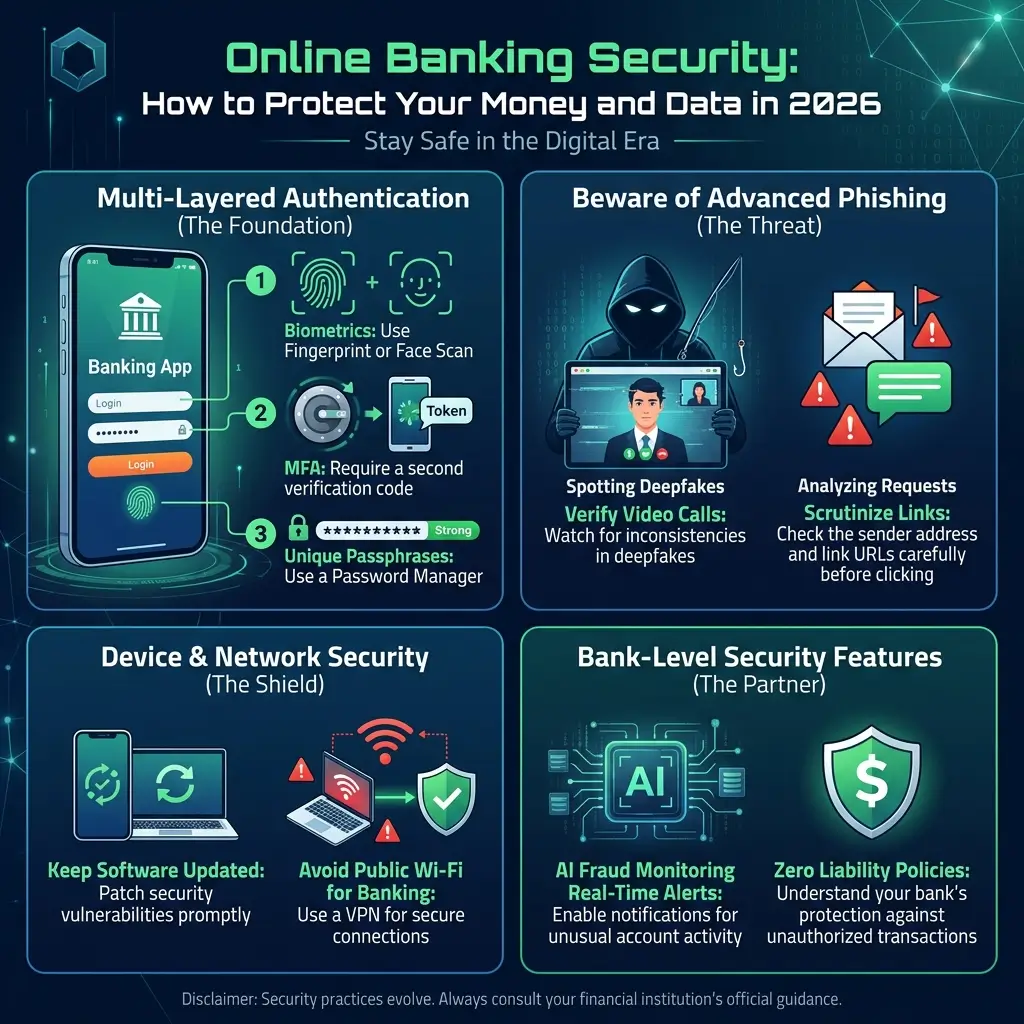
Consumers should always:
- Use trusted apps
- Protect passwords
- Monitor permissions
- Enable security features
No financial system is completely risk-free, but open banking is designed with security as a major priority.
How to Use Open Banking Safely
Users can significantly reduce risks by following smart security practices.
1. Use Trusted Financial Apps Only
Only connect accounts to reputable and regulated apps.
Download apps from official stores and verified providers.
2. Review Permissions Carefully
Only allow apps to access information they truly need.
Avoid unnecessary permissions.
3. Revoke Access When No Longer Needed
If you stop using an app, disconnect it from your banking account.
4. Monitor Account Activity
Regularly check:
- Transactions
- Connected apps
- Login activity
- Security notifications
This helps identify suspicious activity quickly.
Real-World Examples of Open Banking
Open banking is already used in many everyday financial services.
1. Budgeting Apps
Apps analyze spending and help users manage money more effectively.
2. Payment Apps
Open banking supports direct account-to-account transfers.
3. Lending Platforms
Lenders can assess financial data more accurately and quickly.
This may improve loan approvals and pricing.
4. Investment Apps
Financial apps use transaction data to create personalized investment insights.
Open Banking vs Traditional Banking
| Feature | Open Banking | Traditional Banking |
|---|---|---|
| Data Access | Shared with permission | Mostly restricted |
| Innovation | High | Slower |
| User Control | Strong | Limited |
| Financial Integration | Connected ecosystem | Isolated systems |
| Services | Personalized | Standardized |
Open banking encourages flexibility and innovation.
Open Banking vs Digital Banking
Many people confuse open banking with digital banking, but they are different concepts.
| Feature | Open Banking | Digital Banking |
|---|---|---|
| Focus | Data sharing | Online banking access |
| Main Purpose | Financial integration | Digital convenience |
| Users | Banks + third-party apps | Bank customers |
| Technology | APIs | Banking platforms |
Digital banking provides online access to financial services, while open banking connects multiple financial systems together.
Global Adoption of Open Banking
Open banking is expanding rapidly worldwide.
Some regions are leading adoption more aggressively than others.
Europe
Europe helped popularize open banking through PSD2 regulations, which encouraged banks to share data securely.
United Kingdom
The UK is one of the most advanced open banking markets globally.
Many fintech companies actively use open banking systems.
Australia
Australia introduced Consumer Data Right (CDR) regulations to support secure financial data sharing.
Other Regions
Countries across Asia, North America, Latin America, and the Middle East are increasingly exploring open banking frameworks.
Global adoption is expected to continue growing through 2026 and beyond.
The Future of Open Banking in 2026 and Beyond
Open banking is evolving into something even larger: Open Finance.
This means financial data sharing may expand beyond banking into:
- Insurance
- Investments
- Retirement planning
- Tax systems
- Lending
- Wealth management
Several major trends are shaping the future.
1. AI Integration
Artificial intelligence will make open banking smarter.
Apps may soon provide:
- Predictive financial insights
- Automated money management
- AI-driven financial planning
- Personalized investment strategies
2. Expansion Beyond Banking
Open finance will connect multiple financial sectors into one ecosystem.
Users may eventually manage all financial services from a single platform.
3. Faster Global Payments
Open banking may help improve international payment speed and reduce costs.
4. Improved Fraud Detection
AI and advanced analytics will strengthen fraud prevention systems.
Who Benefits Most From Open Banking?
Open banking creates value for many different groups.
Individuals
Consumers gain:
- Better financial tools
- Faster payments
- More personalized services
- Improved financial visibility
Businesses
Companies benefit from:
- Faster transactions
- Improved cash flow
- Better customer payment experiences
Developers and Fintech Companies
Open banking allows developers to build innovative financial products.
Financial Institutions
Banks can improve digital experiences and compete more effectively with fintech companies.
Common Misconceptions About Open Banking
Several myths still exist around open banking.
“Open Banking Shares All My Data”
False.
Only data you approve can be shared.
“Open Banking Is Unsafe”
Open banking uses strong security systems and regulations.
However, users must still choose trusted apps carefully.
“Only Tech Users Benefit”
Open banking benefits ordinary consumers through better financial services and convenience.
Why Open Banking Matters for SEO and Financial Content
Open banking is one of the fastest-growing finance and fintech topics online.
This topic attracts audiences interested in:
- Digital banking
- Fintech
- Financial apps
- Online payments
- AI finance
- Future banking technology
It also helps websites build:
- Topical authority
- Long-term search visibility
- Strong internal linking opportunities
- Future-focused finance relevance
As financial technology evolves, open banking content will continue growing in importance.
Frequently Asked Questions (FAQs)
Q1: What is open banking?
Open banking allows banks to securely share financial data with approved third-party apps using APIs and customer permission.
Q2: Is open banking safe?
Yes, open banking uses strong security systems, encryption, and regulations. Users should still use trusted apps and monitor permissions.
Q3: Who controls my financial data?
You control who can access your banking information and can revoke access anytime.
Q4: What are APIs in open banking?
APIs are secure digital connections that allow banks and apps to communicate safely.
Q5: Can I disable open banking access?
Yes. Most systems allow users to disconnect apps and revoke permissions whenever they choose.
Q6: What is the future of open banking?
The future includes AI integration, open finance ecosystems, faster global payments, and more personalized financial services.
Final Thoughts: Open Banking Is Reshaping the Future of Finance
Open banking is changing the financial world by giving users greater control, better services, faster payments, and smarter financial tools.
Instead of isolated banking systems, finance is becoming more connected, personalized, and data-driven.
For consumers, this means:
- Better budgeting
- Smarter financial insights
- Faster transactions
- More financial options
- Improved convenience
For businesses and fintech companies, open banking creates opportunities for innovation and growth.
While privacy and cybersecurity remain important concerns, the overall direction of open banking is clear: finance is becoming more open, connected, intelligent, and user-focused.
In 2026 and beyond, open banking is expected to become one of the most important foundations of the modern digital financial ecosystem.