
Running a business in 2026 is faster, more digital, and more global than ever before. Whether you are a freelancer, startup founder, ecommerce seller, remote worker, or small business owner, having the right financial setup is no longer optional — it is essential.
One of the most important tools every entrepreneur needs is a business bank account.
But today, traditional business banking is rapidly being replaced by smarter, faster, and more flexible online business bank accounts that can be opened and managed entirely online.
Modern online business banking offers far more than just storing money. The best platforms now provide:
- Fast account setup
- Global payment support
- Multi-currency banking
- Automated expense tracking
- Invoicing tools
- Accounting integrations
- Real-time analytics
- Lower fees
- Mobile-first financial management
For entrepreneurs, this means better control, improved cash flow, and easier business operations.
This complete 2026 guide explains how online business bank accounts work, why they matter, how to choose the best option, what features to look for, and how to open an account step-by-step.
Whether you are starting your first business or upgrading your financial systems, this guide will help you make smarter banking decisions.
What Is an Online Business Bank Account?
An online business bank account is a financial account designed specifically for business use that can be opened, accessed, and managed digitally.
Unlike personal accounts, business bank accounts are built to handle commercial transactions and financial operations.
They allow businesses to:
- Receive customer payments
- Pay employees and suppliers
- Manage cash flow
- Track expenses
- Send invoices
- Separate business and personal finances
Most modern online business accounts are accessible through:
- Mobile apps
- Banking websites
- Cloud-based financial dashboards
Many digital banks now operate without physical branches, making online banking faster and more convenient for entrepreneurs.
Why Every Entrepreneur Needs a Business Bank Account
Many new entrepreneurs initially use personal bank accounts for business transactions.
While this may seem convenient at first, it often creates serious financial and legal problems later.
A dedicated business account is important for several reasons.
1. Separates Personal and Business Finances
Keeping finances separate improves:
- Organization
- Expense tracking
- Bookkeeping
- Tax filing
- Financial reporting
Mixing personal and business money often creates confusion and accounting problems.
2. Creates a Professional Business Image
Customers and clients trust businesses that use professional payment systems.
Receiving payments through a business account looks more credible than using personal banking details.
Professional banking improves business reputation.
3. Access to Business Banking Tools
Business accounts often include advanced financial tools such as:
- Invoicing systems
- Expense tracking
- Accounting integrations
- Cash flow analytics
- Payroll support
These tools help entrepreneurs manage operations more efficiently.
4. Legal and Financial Protection
For registered companies and limited liability businesses, separating finances may be legally important.
Using a business account helps create a clear distinction between personal and business assets.
Benefits of Online Business Bank Accounts
Online business banking has become extremely popular because it offers major advantages compared to traditional banking.
1. Fast Account Opening
Many online banks allow entrepreneurs to open accounts within minutes.
Traditional banks may take days or even weeks.
Digital onboarding has simplified the process significantly.
2. Lower Banking Fees
Many online business banks offer:
- No monthly maintenance fees
- Lower transaction costs
- Affordable international transfers
- Free digital payments
Lower costs are especially valuable for startups and freelancers.
3. Global Payment Support
Modern online business accounts often support:
- International payments
- Multi-currency balances
- Cross-border transfers
- Online payment gateways
This is essential for remote businesses and international clients.
4. Smart Financial Tools
Online banking platforms increasingly include built-in financial management tools such as:
- Expense tracking
- Budgeting
- Financial analytics
- Automated categorization
- Tax reporting
These features help entrepreneurs manage money more effectively.
5. Easy Integration With Business Software
Many online banks integrate directly with:
- Accounting software
- Ecommerce platforms
- Payment gateways
- Payroll systems
- Financial apps
Automation saves time and reduces manual work.
Who Should Open an Online Business Bank Account?
Online business banking is useful for many different types of entrepreneurs.
It is especially ideal for:
- Freelancers
- Consultants
- Remote workers
- Ecommerce sellers
- Startup founders
- Agencies
- Small businesses
- Digital creators
- Online service providers
Even solo entrepreneurs benefit from having professional financial systems.
Types of Online Business Bank Accounts
Different businesses have different financial needs.
Understanding account types helps entrepreneurs choose the right option.
1. Business Checking Accounts
Business checking accounts are used for daily operations.
They support:
- Payments
- Transfers
- Payroll
- Client transactions
- Supplier payments
This is usually the primary operating account for a business.
2. Business Savings Accounts
Business savings accounts are designed to:
- Store reserve funds
- Save profits
- Earn interest
These accounts help businesses build financial stability.
3. Multi-Currency Business Accounts
These accounts allow businesses to hold and manage multiple currencies.
They are ideal for:
- International freelancers
- Ecommerce stores
- Global agencies
- Remote businesses
Multi-currency banking reduces exchange costs and improves global payment efficiency.
4. Digital or Neobank Business Accounts
Neobanks are fully digital financial platforms without traditional branches.
They focus heavily on:
- Fast onboarding
- Mobile-first experiences
- Automation
- Lower fees
- Better user interfaces
Many startups now prefer neobanks over traditional institutions.
Best Features to Look for in an Online Business Bank Account
Instead of choosing based only on brand names, entrepreneurs should focus on features that match their business needs.
1. Low or Transparent Fees
Always review:
- Monthly fees
- Transfer fees
- Currency conversion costs
- ATM fees
- Withdrawal charges
Low-cost banking improves cash flow.
2. Fast and Simple Account Setup
Modern entrepreneurs value speed.
Choose platforms with:
- Fast approval
- Digital verification
- Minimal paperwork
- Easy onboarding
3. International Payment Support
If your business works globally, your account should support:
- International transfers
- Multi-currency balances
- Global payment processing
This is critical for modern online businesses.
4. Accounting and Software Integration
The best business banking platforms connect with tools like:
- Accounting software
- Ecommerce platforms
- Tax tools
- Payment processors
Automation reduces manual bookkeeping work.
5. Strong Security Features
Security is extremely important for business banking.
Look for features such as:
- Two-factor authentication (2FA)
- Fraud monitoring
- Encrypted transactions
- Secure login systems
- Real-time alerts
Step-by-Step: How to Open an Online Business Bank Account
Opening a business account online is now easier than ever.
Here is the typical process.
Step 1: Choose the Right Bank
Compare providers based on:
- Fees
- Features
- Global payment support
- Business tools
- Customer support
Choose a platform that fits your business model.
Step 2: Prepare Required Documents
Most banks require:
- Business registration documents
- Government-issued ID
- Address verification
- Tax information
- Business ownership details
Requirements vary depending on the country and business structure.
Step 3: Complete the Application
You provide:
- Business information
- Contact details
- Industry type
- Ownership structure
Most applications are completed online.
Step 4: Verify Your Identity
Banks may use:
- Video verification
- Selfie verification
- Document uploads
- Biometric checks
This helps prevent fraud and meet compliance requirements.
Step 5: Fund Your Account
Some banks require an initial deposit.
Others allow zero-balance setup.
Step 6: Start Managing Your Business Finances
Once approved, you can:
- Receive client payments
- Pay suppliers
- Track expenses
- Send invoices
- Manage cash flow
Your business banking system becomes fully operational.
Key Features Modern Entrepreneurs Should Use
Modern business banking offers far more than basic transactions.
Smart entrepreneurs use advanced tools to improve operations.
1. Invoicing Tools
Some platforms allow businesses to:
- Create invoices
- Send payment requests
- Track unpaid invoices
This simplifies client billing.
2. Expense Tracking
Automated expense categorization improves bookkeeping and tax management.
3. Analytics Dashboards
Business owners can monitor:
- Revenue trends
- Cash flow
- Spending patterns
- Financial performance
Real-time financial visibility improves decision-making.
4. Multi-User Access
Businesses can give controlled access to:
- Accountants
- Finance teams
- Employees
This improves collaboration while maintaining security.
5. API Integration
Advanced platforms allow API connections with:
- Ecommerce systems
- Financial apps
- Internal software
This supports automation and scalability.
Online Business Banking vs Traditional Business Banking
| Feature | Online Business Banking | Traditional Banking |
|---|---|---|
| Setup Speed | Fast | Slower |
| Fees | Often lower | Often higher |
| Accessibility | 24/7 online | Limited hours |
| Tools | Advanced digital tools | More basic |
| Branch Visits | Usually unnecessary | Often required |
| International Support | Strong | Varies |
Digital banking offers greater convenience and flexibility for modern entrepreneurs.
Common Mistakes Entrepreneurs Should Avoid
New business owners often make avoidable banking mistakes.
1. Using Personal Accounts for Business
This creates accounting confusion and weakens professionalism.
2. Ignoring Hidden Fees
Some banks charge for:
- International transfers
- Currency exchange
- Withdrawals
- Extra transactions
Always review pricing carefully.
3. Not Checking International Features
Global businesses need international payment support.
Not all banks handle cross-border payments efficiently.
4. Choosing the Wrong Account Type
Different businesses need different financial tools.
Choose based on your operations and growth plans.
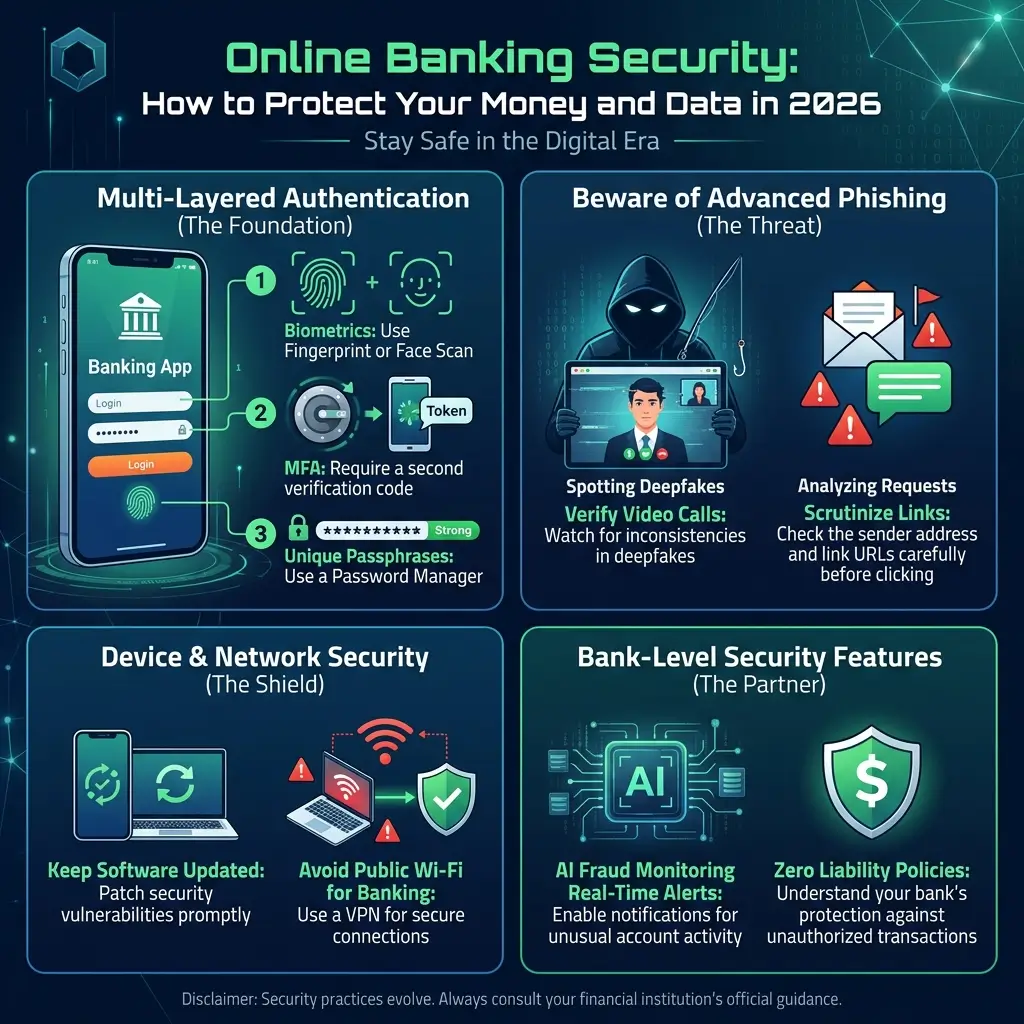
Is Online Business Banking Safe?
Yes — modern online business banking is generally very secure.
Banks use advanced protections such as:
- Encryption
- Fraud detection
- Multi-factor authentication
- Real-time monitoring
- Secure APIs
However, businesses should still follow good security practices.
Business Banking Security Tips
Protect your financial systems by:
- Using strong passwords
- Enabling two-factor authentication
- Monitoring transactions regularly
- Avoiding suspicious links
- Limiting account access carefully
Cybersecurity is now part of responsible business management.
Why Online Business Banking Is a High-Value Financial Topic
Business banking attracts strong commercial interest because business users are highly valuable customers.
Keywords such as:
- “online business bank account”
- “business checking account online”
- “best business bank account”
- “business banking for startups”
often attract:
- High CPC advertising
- Financial service competition
- Strong conversion intent
This makes business banking content highly valuable for financial websites and publishers.
Pro Tips for Entrepreneurs
Successful entrepreneurs often use smart banking strategies.
Open Multiple Accounts
Separate accounts for:
- Operations
- Taxes
- Savings
- Payroll
improve organization.
Automate Financial Processes
Use integrations and automation tools whenever possible.
Track Every Expense
Good bookkeeping improves financial control and tax preparation.
Plan Taxes Early
Digital banking tools help track tax obligations throughout the year.
Frequently Asked Questions (FAQs)
Q1: Can I open a business bank account online?
Yes, many banks and fintech platforms allow complete online account setup.
Q2: Do freelancers need business bank accounts?
Freelancers can benefit greatly from separating business and personal finances.
Q3: Can online business accounts receive international payments?
Yes, many online business banks support global transactions and multi-currency accounts.
Q4: Are online business bank accounts safe?
Yes, reputable banks use advanced security systems to protect business accounts.
Q5: Is there a minimum balance requirement?
Requirements vary by provider. Some accounts have no minimum balance.
Q6: What documents are needed?
Most banks require business registration, identification, and address verification.
Final Thoughts: Modern Businesses Need Modern Banking
Online business bank accounts are no longer just convenient — they are becoming essential for modern entrepreneurship.
Digital banking gives businesses:
- Faster financial management
- Lower costs
- Better automation
- Global payment support
- Smarter financial tools
For entrepreneurs, freelancers, startups, and online businesses, choosing the right banking platform can improve efficiency, professionalism, and long-term growth.
As digital finance continues evolving in 2026 and beyond, online business banking will become even more intelligent, connected, and globally accessible.
The businesses that adapt early will be better positioned to scale, compete, and succeed in the modern digital economy.